

5 Best AI Trading Bot Platforms in 2026: How Traders Use AI Bots for Smarter Strategies

AI trading bots have become more common in 2026 as traders look for ways to automate research, signals, and trade execution. Instead of watching charts all day, a bot can follow rules and react to market data automatically.
But not every AI trading bot works in the same way. Some platforms manage the strategy for the user, while others give traders detailed control over entries, exits, indicators, and risk settings.
This guide compares five AI and automated trading platforms and explains how each one works, what it offers, and what traders should check before using it.
Important: Automated trading involves financial risk. AI does not guarantee profits, and past performance does not guarantee future results.
Why AI Trading Bots Are Becoming Strategy Systems in 2026
Modern trading bots are moving beyond simple “buy” and “sell” automation. Many platforms now combine market data, technical indicators, signals, machine learning, backtesting, and automated execution.
This means a bot can become part of a complete trading system rather than just a tool that places orders.
A typical AI-assisted trading system may handle:
- Market scanning
- Technical signals
- Entry and exit rules
- Stop-loss and take-profit settings
- Portfolio monitoring
- Backtesting
- Trade execution
- Risk controls
The important point is that automation does not remove risk. It simply makes a trading process faster and more consistent.
Key Features to Look for in an AI Trading Bot
Before choosing an automated trading platform, look at how much control it gives you and what markets it supports.
Important features include:
- Automation: Can the platform execute trades automatically?
- Strategy tools: Can you create or adjust trading rules?
- Backtesting: Can strategies be tested against historical data?
- Risk controls: Are stop-losses, position limits, and exposure controls available?
- Supported markets: Does it work with crypto, stocks, forex, or other assets?
- Fees: Check subscriptions, trading fees, spreads, and other costs.
- Paper trading: Can you test strategies without using real money?
- Security: Check API permissions, account protection, and custody arrangements.
- Transparency: Understand exactly how the AI or algorithm makes decisions.
A strong feature list does not mean a bot will make money. The strategy, market conditions, costs, and risk controls still matter.
1. SaintQuant — Best for Fully Managed AI Quant Trading
SaintQuant takes a different approach from platforms that ask users to build their own bots. The company describes its service as a fully managed AI-powered crypto trading platform.
Users choose a strategy and risk level while the platform handles automated execution and portfolio management.
SaintQuant says its strategies include DCA, Grid, and Swing approaches. Its website also reports more than 150,000 active users, more than 4 million trades, and 10+ strategies. These figures are company-reported and should be independently verified before relying on them.
The platform lists different strategy plans with different minimum amounts and durations. Because pricing and product terms can change, users should check the current terms directly before making any financial decision.
SaintQuant at a glance
| Feature | Details |
| Main focus | Automated crypto trading |
| Strategy types | DCA, Grid, Swing |
| Automation | Fully managed |
| AI/quant approach | Machine learning and quantitative models |
| Risk tools | Stop-loss and exposure controls |
| User control | Strategy and risk selection |
| Important check | Verify current terms, fees, and regulatory status |
SaintQuant may be interesting to readers who want automation without building a strategy themselves. However, fully managed automation also means giving up some of the detailed control available on strategy-building platforms.
2. 3Commas — Best for Crypto Bot Strategy Control
3Commas is focused on giving crypto traders tools to create and manage automated strategies. Its platform supports different bot types, including DCA, Grid, and Signal Bots.
The platform also supports exchange connections through API keys and offers tools for portfolio management and automated execution.
As of 2026, 3Commas lists paid plans starting at $20 per month for its Starter plan on its pricing pages, with higher tiers offering additional bot and account limits.
3Commas at a glance
| Feature | Details |
| Main focus | Crypto automation |
| Bot types | DCA, Grid, Signal |
| Exchange connections | Supported exchanges |
| Pine Script | Available on supported plans |
| API | Available |
| Free account | Available, with trading limitations |
| Paid plans | Available |
One useful feature is the level of control. Traders can build automation around their own rules rather than simply selecting one managed strategy.
That makes 3Commas more suitable for people who want to understand and control how their automation works.
3. Pionex — Best for Built-In Crypto Trading Bots
Pionex combines a cryptocurrency exchange with built-in trading bots. This removes the need to connect a separate third-party bot service for many of its automated strategies.
The platform currently advertises multiple built-in bots, including Grid Trading and DCA-related tools. Pionex says its bots do not have a separate subscription or activation fee, although trades still incur applicable trading fees.
Pionex’s published standard spot fee is currently 0.05% for maker and taker trades, while specific products can have different costs.
Pionex at a glance
| Feature | Details |
| Main focus | Crypto trading |
| Bot location | Built into exchange |
| Bot examples | Grid, DCA, Rebalancing |
| Separate bot subscription | No for built-in bots |
| Spot fee shown by platform | 0.05% maker/taker |
| Automation | Built-in |
The main idea behind Pionex is simplicity. Instead of managing an exchange account and a separate automation service, users can access the bots directly within the trading platform.
Still, traders need to understand how each bot works before using it because automated orders can continue executing when market conditions change.
4. Cryptohopper — Best for Cloud-Based Crypto Automation
Cryptohopper is a cloud-based crypto trading platform that lets users connect supported exchanges and automate strategies.
The platform supports features such as automated trading, DCA, stop-loss, take-profit, copy trading, paper trading, backtesting, and strategy design.
Cryptohopper’s current pricing page lists Explorer at $29 monthly, Adventurer at $69, and Hero at $129 when billed monthly. Annual billing is shown at a discount.
Cryptohopper at a glance
| Feature | Details |
| Main focus | Crypto automation |
| Platform type | Cloud-based |
| Automated trading | Yes |
| Paper trading | Yes |
| Backtesting | Yes |
| DCA | Yes |
| AI features | Available on higher-tier plans |
| Free trial | 3 days |
One advantage of a cloud platform is that the trading system does not need to run continuously on your own computer.
Cryptohopper also says it does not hold custody of user funds. Instead, it connects to supported exchanges through API access or supported connection methods.
5. Trade Ideas — Best for AI Stock Scanning and Real-Time Signals
Trade Ideas takes a different path because it focuses on stocks rather than primarily crypto trading.
Its platform provides real-time market data, customizable scans, alerts, screeners, charts, and AI-powered trading tools. Its premium plan includes AI-driven signals, backtesting, smart risk levels, and auto-trading features.
As of the current 2026 pricing page, Trade Ideas lists its Core plan at $89 per month when paid annually and its Premium/Apex plan at $178 per month when paid annually.
Trade Ideas at a glance
| Feature | Details |
| Main focus | Stock trading tools |
| Real-time data | Yes |
| Stock scanners | Yes |
| AI signals | Premium tier |
| Backtesting | Premium tier |
| Auto trading | Premium tier |
| Paper trading | Available |
Trade Ideas is therefore different from crypto-focused platforms such as Pionex and Cryptohopper.
Its strength is the combination of real-time stock scanning, alerts, strategy tools, and AI-assisted analysis rather than simply running a pre-built crypto bot.
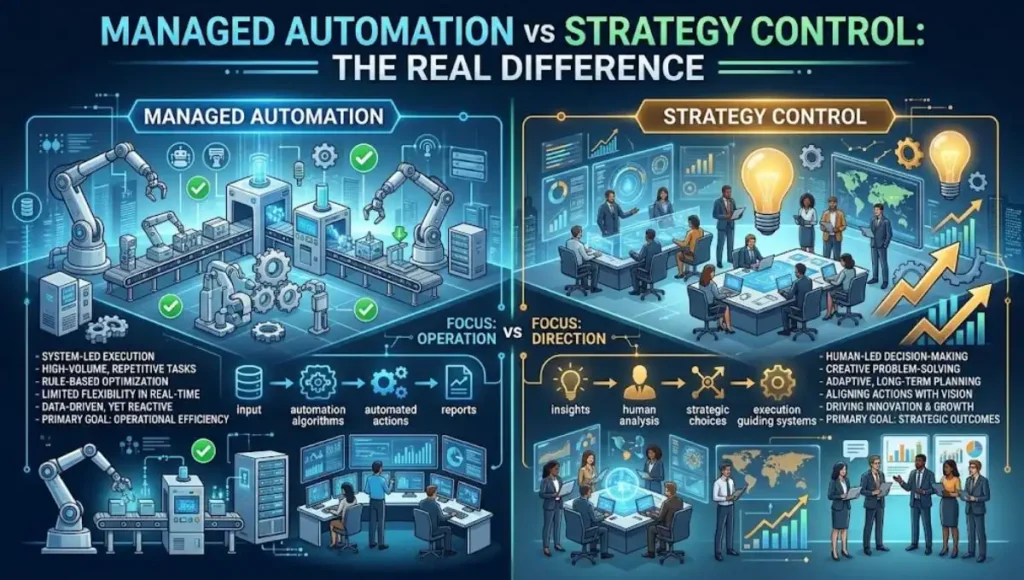
Managed Automation vs Strategy Control: The Real Difference
The biggest difference between trading bot platforms is often who controls the strategy.
With managed automation, the platform determines most of the strategy logic. The user usually selects a plan, risk level, or strategy and lets the system handle execution.
With strategy-control platforms, the trader has more responsibility. They can choose indicators, rules, entry conditions, exits, and other settings.
| Managed Automation | Strategy Control |
| Easier to start | More customization |
| Less technical work | More technical knowledge |
| Platform manages more decisions | Trader manages more decisions |
| Fewer settings | More settings |
| Less direct control | Greater direct control |
Neither model removes market risk. The better fit depends on how much control and technical involvement a trader wants.
How Traders Use AI Bots for Smarter Strategies
AI and automated bots can help organize a trading process, but they should not be viewed as automatic profit machines.
Common uses include:
1. Market monitoring
A bot can monitor markets continuously and identify conditions that match predefined rules.
2. Rule-based execution
Instead of manually entering every order, traders can automate an established strategy.
3. Backtesting
Some platforms allow users to test a strategy against historical market data before considering live execution.
4. Risk management
Features such as stop-losses, position limits, and exposure controls can help define how much risk a strategy is allowed to take.
5. Removing emotional decisions
Automation can reduce some manual decisions, but it does not guarantee that the underlying strategy is good.
6. 24/7 crypto monitoring
Crypto markets operate around the clock, making automation useful for monitoring periods when a person is not watching the market.
AI Trading Bot Risks, Costs, and Limitations
The biggest mistake is assuming that the word AI means a trading bot can predict the market.
AI models can make mistakes, perform poorly in new conditions, or produce signals that stop working when market behavior changes.
Other risks include:
- Market losses
- Poor strategy design
- Over-optimization
- Slippage
- Trading fees
- Subscription costs
- API security risks
- Exchange outages
- Software errors
- Sudden market volatility
Costs also matter. A strategy that makes small gains may become unattractive after exchange fees, subscription fees, spreads, and slippage are included.
Always check the complete fee structure instead of looking only at the advertised subscription price.
How to Choose the Right AI Trading Bot for Your Trading Goals
Start with the market you want to study. A crypto bot and a stock-scanning platform can have completely different features and risks.
Then decide how much control you want.
If you want more automation:
Look for platforms that provide managed strategies and simple risk settings.
If you want more control:
Look for customizable bots, indicators, backtesting, API access, and detailed strategy settings.
If you are researching before using real money:
Look for paper trading or demo features. This can help you understand how a strategy behaves without immediately exposing real capital.
Most importantly, do not choose a platform only because it advertises high returns. Review its fees, risk disclosures, security model, supported markets, and current terms.
Frequently Asked Questions
What are automated trading bots?
Automated trading bots are software programs that follow predefined rules to monitor markets and place trades without requiring every order to be entered manually.
What are AI trading bots?
AI trading bots use machine learning or other AI-based methods alongside trading rules and market data to generate signals, analyze conditions, or automate decisions.
What are automated trading bots for Forex?
Forex trading bots are programs designed to automate currency-market strategies using rules such as technical indicators, price conditions, and risk controls.
What are the best automated trading bots?
There is no single bot that is best for every trader; the right choice depends on the market, strategy, automation level, fees, and risk controls.
Is there a free AI trading bot?
Some platforms offer free accounts, trials, or open-source software, but free access may have limits and does not mean trading itself is free.
Where can I find trading bots on GitHub?
GitHub has open-source projects such as Hummingbot, which provides a framework for creating and deploying automated trading strategies.
Are there free automated trading bots?
Yes, some open-source trading bots are available without a software license fee, but users may still face exchange fees, hosting costs, technical work, or other expenses.
What are automated trading bots for Telegram?
Telegram trading bots can connect messaging interfaces with trading functions, but users should carefully check permissions, security, and the credibility of any bot before connecting an account.
Final Thoughts
AI trading bots are becoming more advanced in 2026, but automation does not remove the basic risks of trading.
The five platforms covered here take different approaches. SaintQuant focuses on managed automation, 3Commas and Cryptohopper offer greater strategy control, Pionex puts bots directly inside a crypto exchange, and Trade Ideas focuses heavily on stock scanning and AI-assisted signals.
The most important step is to understand how a platform works before considering whether it fits a particular trading approach. Always review current fees, risks, security information, and terms because platform features can change.