

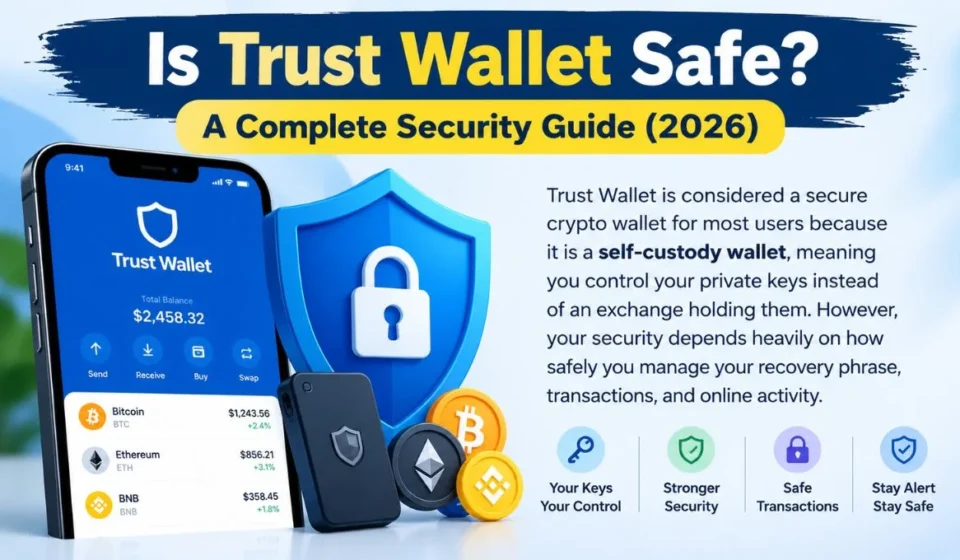

Trust Wallet is considered a secure crypto wallet for most users because it is a self-custody wallet, meaning you control your private keys instead of an exchange holding them. However, your security depends heavily on how safely you manage your recovery phrase, transactions, and online activity.
Unlike exchange wallets, Trust Wallet does not store your crypto on company servers. Your assets remain on the blockchain, while your wallet provides access through private keys stored on your device.
What Is Trust Wallet and How Does It Work?
Trust Wallet is a non-custodial cryptocurrency wallet that allows users to store, send, receive, swap, and interact with blockchain applications. It supports multiple networks and millions of crypto assets through a single mobile application.
The wallet was launched in 2017 and became one of the most popular self-custody wallets in the crypto industry. Users do not need an account or personal information to create a wallet.
How Trust Wallet Stores Your Crypto
Trust Wallet does not physically store coins inside the app. Your cryptocurrency exists on the blockchain, and Trust Wallet stores the information needed to access those funds.
When you create a wallet:
- A private key is generated.
- A recovery phrase is created as a backup.
- The private key is encrypted and stored on your device.
- Transactions are signed directly from your wallet.
Trust Wallet states that private keys remain on the user’s device and are not sent to external servers.
| Feature | Trust Wallet Approach |
| Wallet type | Self-custody wallet |
| Private keys | Stored on your device |
| Recovery backup | 12-word recovery phrase |
| Account required | No |
| Crypto storage | Blockchain-based |
What Are Private Keys and Recovery Phrases?
A private key is a secret code that proves ownership of your cryptocurrency. Anyone with access to your private key can control your funds.
A recovery phrase is a 12-word backup that can restore your wallet if your phone is lost, damaged, or replaced.
Example:
- Private key = Your wallet password behind the scenes
- Recovery phrase = Backup key to restore your wallet
Never share your recovery phrase with anyone. Trust Wallet support will never ask for it.
Is Trust Wallet Safe to Use?
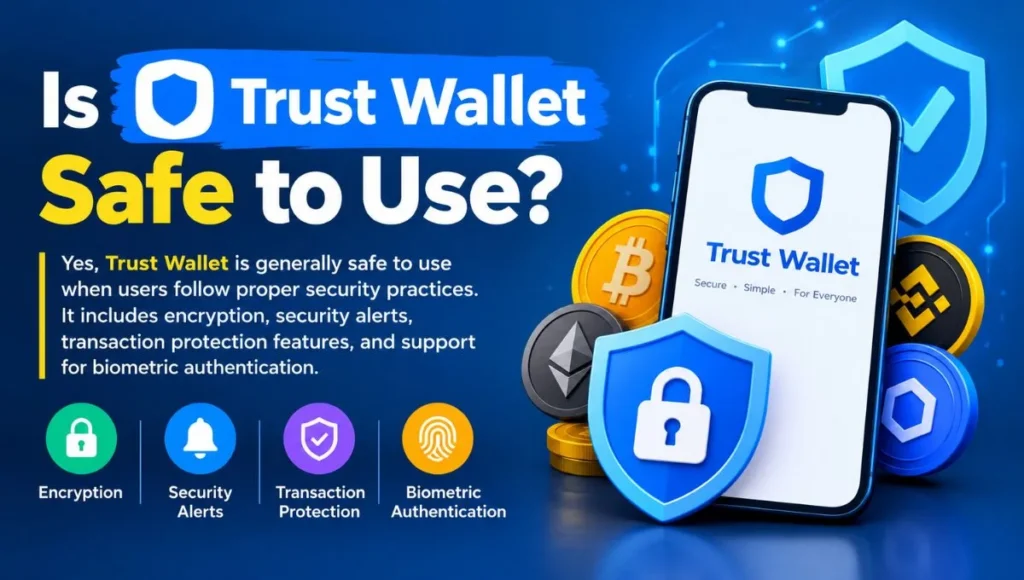
Yes, Trust Wallet is generally safe to use when users follow proper security practices. It includes encryption, security alerts, transaction protection features, and support for biometric authentication.
However, no crypto wallet can guarantee 100% protection because many attacks happen through user mistakes such as phishing, fake websites, and stolen recovery phrases.
Trust Wallet Security Features
Trust Wallet provides several security features designed to protect user assets:
1. Private Key Encryption
Private keys are encrypted and stored locally on your device instead of being stored on Trust Wallet servers.
2. Security Scanner
Trust Wallet includes a Security Scanner that helps identify suspicious transactions and risky activities before users approve them.
3. Passcode Protection
Users can enable app-level protection using a passcode to prevent unauthorized access.
4. Biometric Authentication
Trust Wallet supports fingerprint and Face ID security depending on the device.
5. Security Audits
Trust Wallet’s security systems have been reviewed through independent security audits and vulnerability programs.
How Trust Wallet Protects Your Assets
Trust Wallet protects users through:
- Local private key storage
- Encryption technology
- Transaction warnings
- Scam detection tools
- Bug bounty programs
- Regular security improvements
But the final responsibility remains with the user because self-custody means you control both your assets and security.
Can Trust Wallet Be Hacked?
Trust Wallet itself is difficult to hack because private keys are not stored on centralized servers. However, users can lose funds through security mistakes.
A wallet can be compromised if:
- Someone gets your recovery phrase
- You install a fake Trust Wallet app
- You approve a malicious transaction
- You connect to unsafe websites
- Your device contains malware
Common Trust Wallet Security Risks
| Risk | How It Happens |
| Recovery phrase theft | User shares backup words |
| Phishing attacks | Fake websites or messages |
| Malware | Infected phones or computers |
| Fake apps | Downloading unofficial versions |
| Unsafe dApps | Approving malicious permissions |
Fake Apps, Scams, and Phishing Attacks
Fake Trust Wallet apps are one of the biggest risks for beginners.
Scammers often create:
- Fake customer support accounts
- Fake wallet recovery websites
- Telegram impersonation scams
- Fake giveaways
A real wallet company will never ask for your recovery phrase.
Always:
- Download Trust Wallet from official app stores
- Check the developer name
- Avoid links from unknown messages
Trust Wallet has also warned users about fake compensation forms, impersonation scams, and phishing attempts.
How to Secure Your Trust Wallet?
Strong wallet security depends on good habits. Follow these steps to reduce risks.
Protect Your Recovery Phrase
Your recovery phrase is the most important security element.
Best practices:
- Write it on paper
- Store it offline
- Keep multiple secure copies
- Never take screenshots
- Never save it in email or cloud storage
- Never share it online
Enable Passcode and Biometric Security
Add an extra protection layer:
- Enable wallet passcode
- Turn on fingerprint or Face ID
- Lock your phone with a strong password
- Keep your device updated
These features help stop someone from accessing your wallet if they physically access your phone.
Avoid Unsafe dApps and Links
Before connecting your wallet:
- Check website URLs carefully
- Avoid unknown dApps
- Review transaction permissions
- Revoke unused approvals
- Do not sign random messages
A single malicious approval can allow scammers to access your tokens.
Trust Wallet vs Other Crypto Wallets
Choosing the right wallet depends on your security needs and how much crypto you hold.
| Wallet Type | Security Level | Best For |
| Trust Wallet | High | Everyday crypto users |
| Exchange Wallet | Medium | Beginners and trading |
| Hardware Wallet | Very High | Long-term storage |
Trust Wallet vs Exchange Wallets
Exchange wallets like Binance keep your private keys under their control.
Trust Wallet gives you full ownership because you control the private keys.
| Trust Wallet | Exchange Wallet |
| You control keys | Exchange controls keys |
| No account needed | Account required |
| More responsibility | Easier recovery |
For active users who want control, Trust Wallet is usually a better option.
Trust Wallet vs Hardware Wallets
Hardware wallets store private keys offline, making them safer against online attacks.
Examples:
- Ledger
- Trezor
Trust Wallet is more convenient, while hardware wallets provide stronger protection for large holdings.
Is Trust Wallet Safe for Beginners?
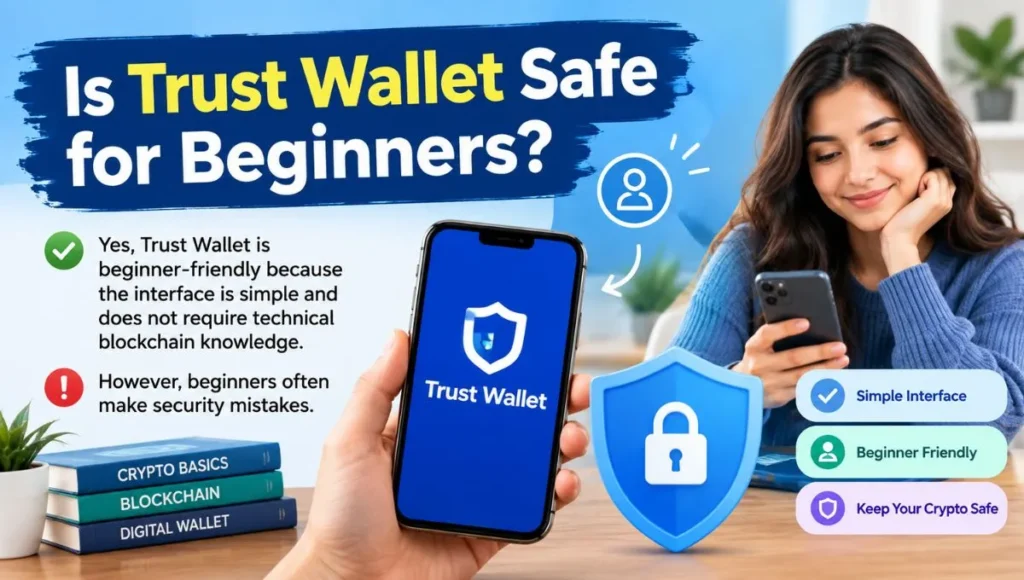
Yes, Trust Wallet is beginner-friendly because the interface is simple and does not require technical blockchain knowledge.
However, beginners often make security mistakes.
Common Mistakes New Users Make
Avoid these mistakes:
- Saving recovery phrases digitally
- Clicking unknown crypto links
- Trusting fake support agents
- Sending crypto without checking addresses
- Approving unknown transactions
Tips for Using Trust Wallet Safely
Follow these beginner rules:
- Start with small amounts
- Learn before using DeFi apps
- Double-check every transaction
- Keep your recovery phrase offline
- Use official Trust Wallet channels only
Is Trust Wallet Safe for Large Crypto Holdings?
Trust Wallet can hold large amounts of cryptocurrency, but it may not be the best choice for storing life-changing funds.
For significant holdings, many users prefer hardware wallets because they keep private keys offline.
When to Use a Hardware Wallet
Consider a hardware wallet if:
- You hold large crypto investments
- You rarely make transactions
- Security is your highest priority
Best Practices for Crypto Storage
For better protection:
- Use cold storage for long-term funds
- Keep daily spending crypto in hot wallets
- Separate personal and investment wallets
- Regularly review wallet permissions
Final Verdict: Is Trust Wallet Safe?
Trust Wallet is a safe and reliable self-custody wallet when used correctly. Its encryption, security tools, and private key control make it a strong option for everyday crypto users.
The biggest security risk is usually not the wallet itself but user behavior.
Who Should Use Trust Wallet?
Trust Wallet is suitable for:
- Crypto beginners
- DeFi users
- NFT users
- People who want full control of their assets
Is Trust Wallet a Good Choice?
Yes, Trust Wallet is a good choice for users who understand self-custody and follow security practices.
For extremely large investments, combining Trust Wallet with a hardware wallet strategy may provide stronger protection.
Frequently Asked Questions
Is Trust Wallet safe from hackers?
Yes, Trust Wallet has strong security features, but users must protect their recovery phrase and avoid scams.
Is Trust Wallet safe according to Reddit users?
Many Reddit users consider it reliable, but discussions often highlight phishing and recovery phrase risks.
Is Trust Wallet safe to use?
Yes, Trust Wallet is safe when downloaded officially and used with proper security habits.
Is Trust Wallet safer than Binance?
Trust Wallet gives you control of private keys, while Binance controls exchange wallets, so security depends on your needs.
What is Trust Wallet used for?
Trust Wallet is used for storing, sending, receiving, swapping crypto, and accessing Web3 apps.
Is Trust Wallet safe for XRP?
Yes, Trust Wallet supports XRP, but users must protect their wallet backup and verify transactions.
Is Trust Wallet traceable?
Blockchain transactions are publicly visible, but Trust Wallet does not track your personal identity.
How reliable is Trust Wallet based on reviews?
Trust Wallet has millions of user reviews and remains one of the most widely used self-custody wallets.